
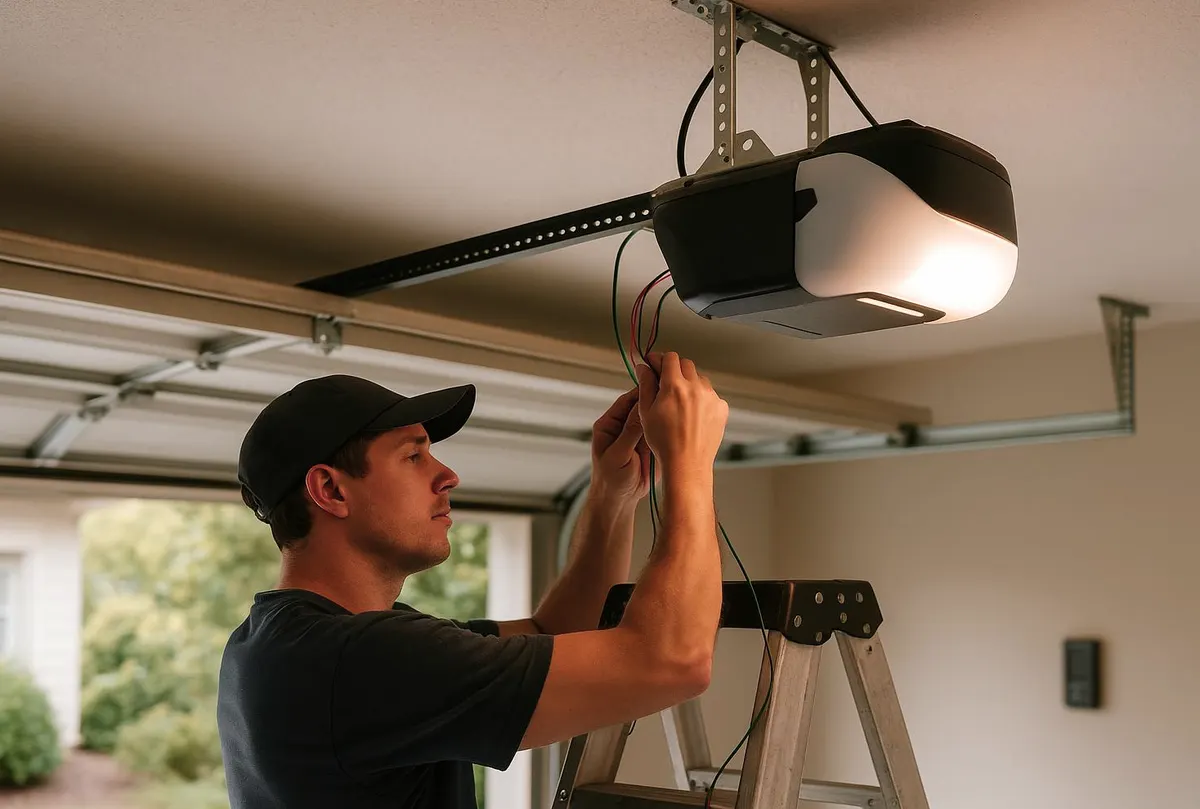
The Moment You Notice Something's Wrong
You pull into the driveway after work, hit the remote, and watch the door start its way down. Then, three-quarters of the way closed, it jerks to a stop and climbs right back up to open. Or maybe it never even tries — you press the button and nothing happens except a blinking light on the opener unit. Either way, you're standing in your garage at dusk wondering if you're going to be dealing with an open garage door all night, and whether that matters more than usual during a season when afternoon storms can roll in fast.
A door that reverses mid-close or refuses to close at all is one of the most common service calls technicians get in this part of Florida, and it's almost never random. There's a specific order of things that cause it, and most of them are affected directly by the heat, humidity, and storm activity this area deals with for months at a time.
What You're Actually Seeing
Before getting into causes, it helps to know which symptom you have, because they point in different directions:
- Door closes partway, reverses, light blinks on the opener — almost always a safety sensor issue.
- Door closes, touches the floor, then reverses immediately — usually a force or limit setting problem, sometimes combined with a track or roller issue.
- Door won't move at all when you press the button — could be sensors, could be the opener itself, could be a dead circuit board.
- Door closes fine some days and not others — classic sign of moisture, sun glare, or a wood door that's swelling and shrinking with humidity.
The Order a Technician Checks These, and What Each Fix Involves
1. The Safety Sensors (Photo-Eyes)
This is the first thing any technician checks, because it's the most common cause by far. Every garage door opener built in the last few decades has two small sensors mounted a few inches off the floor on either side of the track. If the beam between them is broken, dirty, or misaligned, the door will not close, or it'll start closing and reverse the instant it loses the signal.
In this climate, sensors take a beating. Afternoon downpours leave water droplets on the lenses. Humidity causes condensation inside the housing. Spiderwebs and small insects collect on the lens in the warm months. Direct morning or evening sun can also blind one sensor enough that it misreads the other. The fix is usually simple: wipe both lenses clean, check that the indicator lights on both units are solid (not blinking), and make sure nothing — a storage bin, a bike, a stray leaf blower cord — is sitting in the beam path. If the sensors have been bumped out of alignment, they need to be re-aimed so the lights on both sides go solid.
2. Sensor Wiring
If the lenses are clean and aligned but the door still won't cooperate, the next check is the wiring running from each sensor back to the opener. Salt-tinged, humid air causes corrosion at wire connections over time, and rodents looking for shelter in a garage will occasionally chew through low-hanging wires. A technician checks for loose connections, corrosion at the terminals, and continuity in the wire itself. Damaged wiring gets spliced or replaced.
3. Opener Force and Limit Settings
If the door closes and then reverses right as it touches the floor, rather than partway down, the opener's force or limit setting is often the culprit. These settings tell the opener how much resistance to expect and where the floor actually is. Wood and composite doors expand and swell during humid stretches and contract when things dry out, which changes how much force is needed to seat the door — and a setting that worked fine in spring can start causing reversals once summer humidity and fall storm patterns kick in. Adjusting these settings is usually a quick fix, done at the opener's control panel, but it's one that needs to be rechecked periodically rather than set once and forgotten.
4. Track Alignment and Obstructions
Next, a technician looks at the tracks themselves. A door that binds or catches on a slightly bent or misaligned track will struggle against the resistance and trip the opener's safety reversal, even though the sensors and settings are fine. Debris, a dropped tool, or a rail that's worked loose from its bracket can all cause this. The track gets checked for straightness, secure mounting, and anything blocking the rollers' path.
5. Springs Losing Tension
If the door feels heavy when operated manually, or if it struggles noticeably on the way up before ever getting to the closing problem, worn torsion or extension springs are likely involved. As springs lose tension, the opener has to work harder to manage the door's weight, which can trigger the force sensor to reverse the door as a safety measure. This isn't a DIY fix — these springs are under serious tension and need to be replaced with properly matched, correctly sized hardware.
6. Rollers, Hinges, and the Opener's Circuit Board
Worn rollers or stiff hinges cause the door to travel unevenly, which can also trip reversal sensors even when everything else checks out. And if none of the above explains it, the issue may be the opener's circuit board itself — something that happens more often after power surges from storm activity, a real factor during the stretch of the year when lightning and grid fluctuations are more common.
When to Call Precision Garage Door of East Lake Weir
If you've wiped the sensors, checked for obvious obstructions, and the door is still reversing or won't close, it's time to call in a technician rather than keep guessing. Precision Garage Door of East Lake Weir handles this exact troubleshooting sequence every week across East Lake Weir, Ocklawaha, Weirsdale, and the surrounding Marion County area. If the issue turns out to be worn springs, our Garage Door Spring Repair service replaces them with correctly matched hardware rated for your door's weight. If a track has shifted or bent, our Off Track Door Repair gets it realigned and secured properly, not just forced back into place temporarily.
A garage door that won't close reliably is a security gap and an open invitation for humidity, pests, and storm wind to get into your garage. Call Precision Garage Door of East Lake Weir today and we'll have a technician out to diagnose it and get your door closing the way it should.