
What Another Season of Putting This Off Actually Costs
Skip a storm-readiness check this year and the risk isn't abstract. A garage door that fails during high wind doesn't just mean a dented panel — it means wind pressure suddenly has a straight shot into your attached garage, and from there into the rest of the house. Insurance adjusters see this pattern every hurricane season: roof damage that started because a garage door blew in first. Replacing a failed door after the fact, on an emergency basis, almost always costs more than reinforcing or replacing it ahead of time, and that's before you factor in water damage to whatever was stored in the garage or drywall and insulation that got soaked when the door gave way.
Why the Garage Door Is a Home's Weakest Wall
Most exterior walls are solid, continuous structure. A garage door is a large moving panel held in a track, counterbalanced by springs, and driven by a motor that was never designed to resist sustained wind pressure. It's also the biggest single opening in most homes — often 16 feet wide or more for a double-car door. When wind hits a closed house, pressure builds inside if that door fails, pushing outward on the roof and walls from the inside. That's why building codes in wind-prone parts of Florida treat garage doors as a structural component, not just an appliance. If your door was installed years ago, or came with the house and you've never asked about its wind rating, it may not meet the pressure resistance a standard door needs in this part of the state.
Signs Your Door Is Already Compromised
- Visible flex in the panels when the door is closed and wind gusts, even moderately
- Rust spots on tracks, hinges, or the bottom panel — common here given the humidity and afternoon downpours that keep moisture sitting on hardware
- Swollen or warped panels, especially on wood or composite doors that have absorbed moisture repeatedly over multiple wet seasons
- Loose or missing track bolts, which reduce the door's ability to stay seated under pressure
- An opener that struggles or reverses unexpectedly, which can indicate the door is already out of alignment
What to Check Before the Next System Approaches
Late in hurricane season is exactly when complacency sets in — people assume the worst has passed, but storms and tropical systems can still move through Marion County into November. A few checks now take less than twenty minutes:
- Inspect the tracks and rollers. Rust and grit from humidity and storm runoff cause rollers to bind. A door that doesn't move smoothly by hand (disconnect the opener first) is a door under more strain than it should be.
- Check spring tension. Springs that have weakened won't hold the door properly in a gust, and a door that's hard to lift manually is a sign tension has dropped.
- Look at the bottom seal. A cracked or flattened seal lets wind-driven rain in during a downpour, which is often how garages flood even when the roof is fine.
- Confirm the door has a wind-load rating appropriate for this area, or ask what reinforcement options exist if it doesn't. Retrofit kits with horizontal struts exist for some doors, but not all — this is worth confirming rather than assuming.
- Test the opener's backup battery if it has one, since power often drops before and during a storm and you don't want the door stuck half-open.
Repair, Reinforce, or Replace?
Not every door needs replacing. A door with good bones but weak springs or worn rollers can often be brought back to full function with a cable and roller replacement or a spring swap. But a door that's visibly warped, has a track that's bent from a past off-track event, or predates current wind-pressure expectations is a different situation — reinforcing an old, swollen wood door usually isn't cost-effective compared to replacing it with a door built for the pressure ratings used in Florida. As a rough guide, national pricing for a new wind-rated garage door typically runs from the low thousands into the mid-thousands depending on size and material, while spring or roller repairs are usually a fraction of that. The right call depends on the door's age, material, and how it's held up through past storms — not a fixed rule.
When to Call Precision Garage Door of East Lake Weir
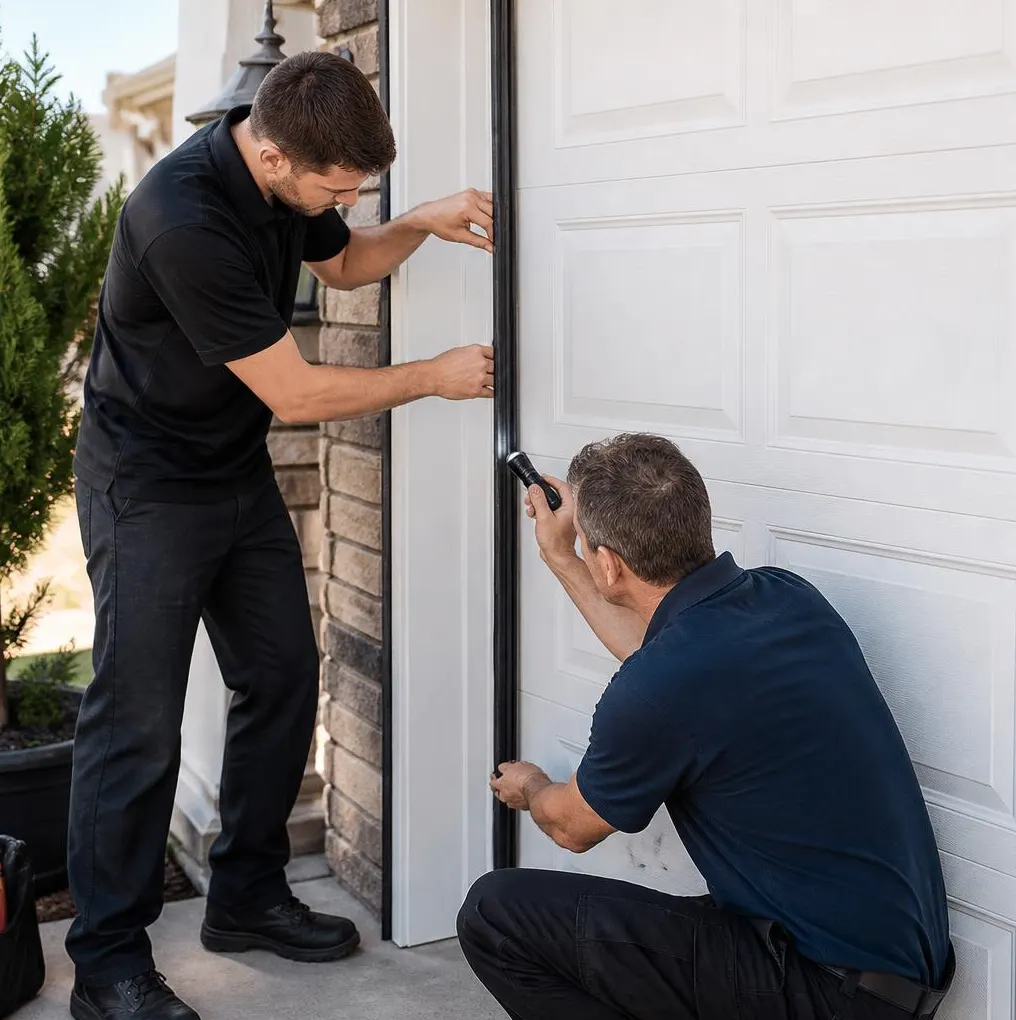
If your door flexes in the wind, won't move smoothly, or you're not sure whether it meets current wind-load expectations, that's the point to get it looked at rather than wait. Precision Garage Door of East Lake Weir handles both ends of this: a Garage Door Tune-Up & Maintenance visit to catch rust, worn rollers, and loose hardware before they become a storm-day failure, and full Garage Door Installation & Replacement if your current door is past the point of reinforcing. We'll check tension, tracks, seals, and overall structural condition, and tell you plainly whether a repair will hold up or whether replacement is the more sensible move given the door's age and condition.
If you're in East Lake Weir, Ocklawaha, Weirsdale, Belleview, Summerfield, Lady Lake, Silver Springs, or Ocala and haven't had your garage door checked this season, don't wait for the next system in the forecast. Call Precision Garage Door of East Lake Weir and get it looked at now, while there's still time to fix it right.